The biggest surprise for most first-time visitors to the Sahara isn't the heat — it's how cold it gets once the sun goes down. Desert temperatures can swing more than 20°C between afternoon and night, so packing for both extremes matters.
During the day, light, breathable, long-sleeved clothing works better than shorts and t-shirts — it protects against sun and blowing sand at the same time. A scarf or shesh (the traditional Berber head wrap) is worth picking up locally; guides will usually show you how to wrap it properly.
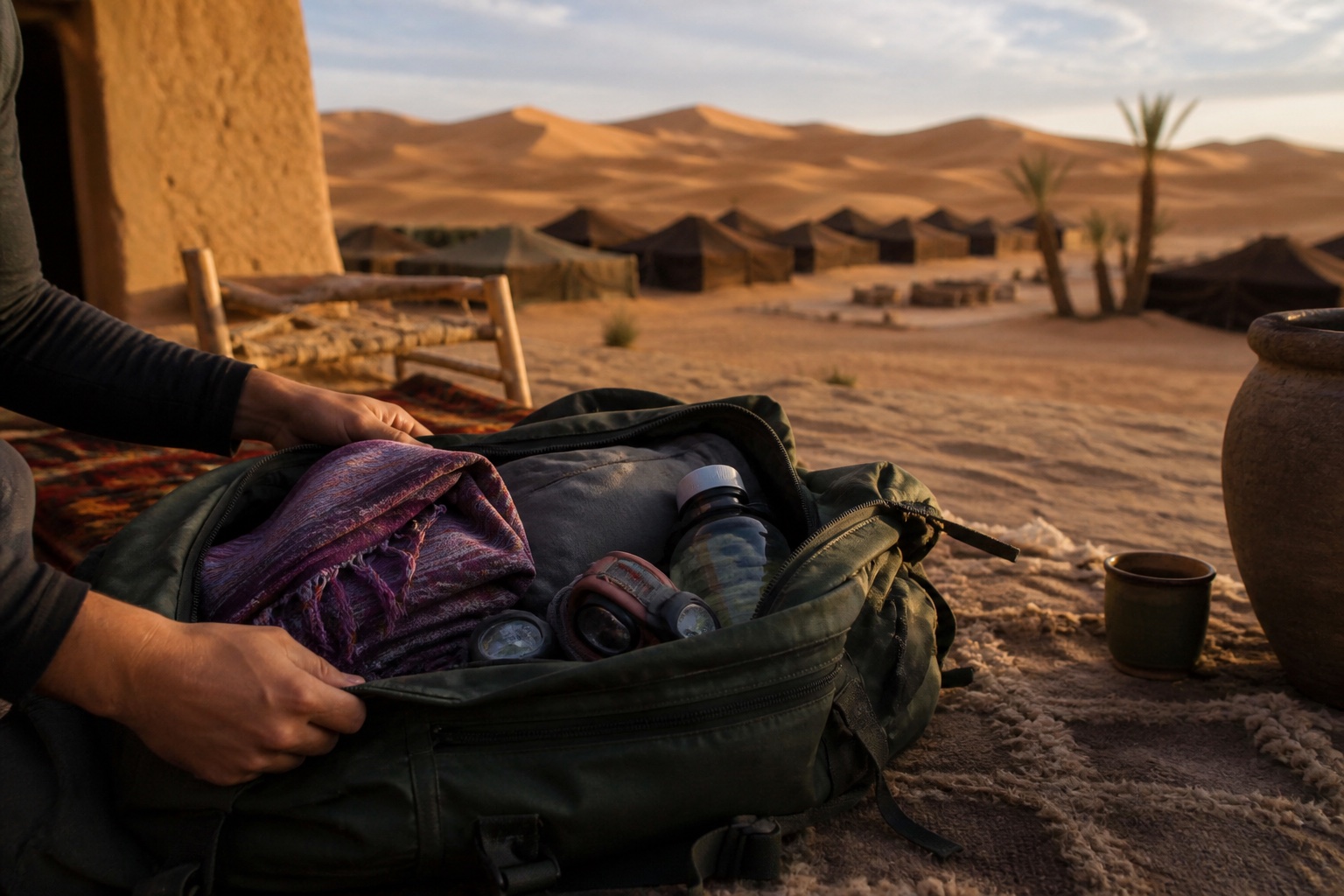
Once the sun sets, temperatures can drop close to freezing outside the warmer months, so pack a proper layer — a fleece or light jacket at minimum, more if you're visiting between November and February. Desert camps provide blankets, but your own layer makes the difference on the walk between the fire and your tent.
Don't forget a headlamp or flashlight, a reusable water bottle, and a dust-proof bag for your phone or camera. And bring a fully charged battery — there's no better place in Morocco to watch the stars come out.